
CAZRI Moth Bean Varieties Demonstrate Remarkable Resilience During El Niño Year
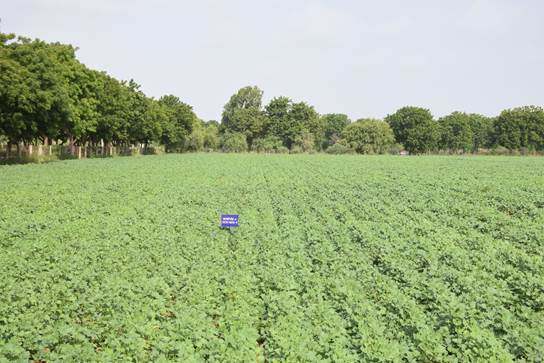
Four moth bean varieties (CAZRI Moth-4, CAZRI Moth-5, CAZRI Moth-6, and CAZRI Moth-7) developed by ICAR-CAZRI have demonstrated remarkable resilience during a 35-day dry spell in the El Niño year of Kharif 2026. Grown in western Rajasthan, these varieties utilized developmental plasticity, early canopy development, and subsurface soil moisture to maintain growth and pod formation despite limited rainfall. Seed production for these varieties is currently underway to meet indents on the Saathi Portal.
Why It Matters
Important for agriculture and science sections in competitive exams like UPSC and state-PSC regarding climate-resilient crop varieties and arid region farming.
In Simple Words
ICAR-Central Arid Zone Research Institute (CAZRI) in Jodhpur has released four moth bean varieties—CAZRI Moth-4, CAZRI Moth-5, CAZRI Moth-6, and CAZRI Moth-7. During the El Niño year of Kharif 2026, these varieties successfully withstood a 35-day dry spell from August 3 to September 7, maintaining growth and pod development.
Key traits like developmental plasticity, early canopy development, and efficient use of subsurface moisture helped these varieties survive harsh conditions in western Rajasthan. Proper crop management practices and seed multiplication efforts are also underway to expand their cultivation and help farmers achieve better yields of pulses.
Key Points
- Four varieties released: CAZRI Moth-4, CAZRI Moth-5, CAZRI Moth-6, and CAZRI Moth-7.
- Developed by ICAR-Central Arid Zone Research Institute (CAZRI), Jodhpur.
- Demonstrated field-level resilience during a 35-day dry spell (3 August to 7 September 2026) in the El Niño year.
- Moth bean is cultivated over nearly 10 lakh hectares in western Rajasthan with a low productivity of around 350 kg per hectare.
- Seed production for 2026 meets the Saathi Portal-indented seed requirement of 23.32 quintals.
- One quintal of breeder seed can produce around 1,000 to 1,400 quintals of certified seed.
- Varieties feature developmental plasticity, beginning flowering at approximately 30 days after sowing.
- Seed is being multiplied by Rajasthan State Seeds Corporation, National Seeds Corporation, and private players.
Exam Angle
A. ICAR-Central Arid Zone Research Institute (CAZRI), Jodhpur
Source: Press Information Bureau