
Energy Security Inseparable from National Security, Strategic Autonomy and Economic Resilience: Dr. Jitendra Singh
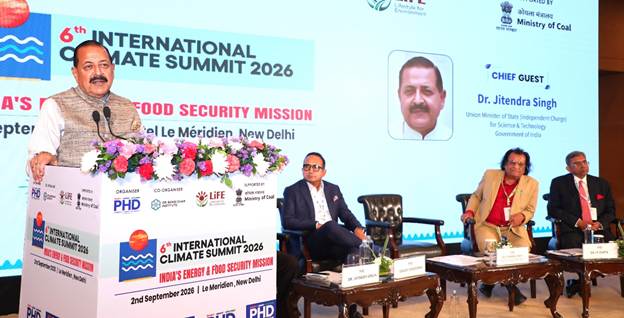
Dr. Jitendra Singh, Union Minister of State for Science & Technology, stated that energy security is inseparable from national security and economic resilience. Speaking at the 6th International Climate Summit 2026, he emphasized India's need for self-reliant, affordable, and technologically advanced energy solutions through multiple pathways including nuclear energy (100 GW target by 2047), green hydrogen, biofuels, and circular economy approaches, with increased private sector participation.
Why It Matters
Relevant for UPSC and state-PSC candidates studying national energy policy, government initiatives, and India's strategic priorities. Also pertinent for banking and SSC exams covering government schemes and economic resilience.
In Simple Words
Dr. Jitendra Singh, Minister of State for Science & Technology, said energy security is inseparable from national security and economic resilience, calling for India to become more self-reliant and technologically advanced in energy. He highlighted the target of 100 GW of nuclear power by 2047, five Small Modular Reactors by 2033, and growing work on green hydrogen and biofuels.
He also pointed to India's startup ecosystem growing from ~350 to nearly 2.4 lakh startups (now 3rd largest globally), and a ₹1 lakh crore RDI Fund created to boost private-sector research and development.
Key Points
- Energy security linked to national security, strategic autonomy, and economic resilience
- Nuclear energy target of 100 GW by 2047
- Target of five Small Modular Reactors by 2033
- Green hydrogen train recently flagged off
- Start-up ecosystem grown from ~350 to ~2.4 lakh; India ranks third globally
- ₹1 lakh crore RDI Fund introduced to accelerate private participation in R&D
- Anusandhan National Research Foundation expects 50-60% resources from non-government sources
- Focus on biofuels, ethanol, and sustainable fuels as part of clean-energy transition
Exam Angle
A. From around 350 startups to almost 2.4 lakh — India now ranks third in the world.
Source: Press Information Bureau