
From Coconut Husk to Enterprise: How Coir is transforming Rural lives
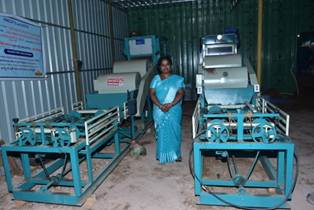
Coconut husk is being transformed into modern enterprises and livelihoods across India's coconut-growing regions through value-added products like mats, ropes, handicrafts, and bio-fertilisers. Supported by the Ministry of MSME, the Coir Board, and the PMEGP, rural entrepreneurs are driving self-employment and women's empowerment. India remains the world's largest coir producer, accounting for over 80 per cent of global coir fibre production.
Why It Matters
This article highlights government schemes like the Prime Minister's Employment Generation Programme (PMEGP) and Coir Vikas Yojana under the Ministry of MSME, making it relevant for questions on rural development, women's empowerment, and economic schemes in competitive exams.
In Simple Words
Coir, a natural and durable fibre from coconut husk, is driving rural entrepreneurship across India. With support from the Ministry of MSME, Coir Board, and schemes like PMEGP, rural artisans are converting coir waste into value-added items such as doormats, ropes, and bio-fertilisers.
India is the world's largest coir producer, holding over 80% of global production, with women comprising nearly 80% of the workforce in fibre extraction and spinning. Innovations like coir pith bio-fertilisers and rail wheel axle packaging cups are further modernising the traditional sector.
Key Points
- Coir is a natural, durable, and eco-friendly fibre part of India's rural economy.
- Support is provided by the Ministry of MSME, Coir Board, and PMEGP.
- Organised coir production in India began in 1859 in Alappuzha, Kerala.
- India is the world's largest producer of coir, accounting for over 80 per cent of global coir fibre production.
- Women account for nearly 80 per cent of those engaged in coir fibre extraction and spinning.
- Ms. Allam Gowthamy established Adigo Coir Products in Andhra Pradesh with PMEGP assistance, training 120 women.
- Shri P. Surendran established Sampoorna Plus Agro Fertilizer Enterprises in Kerala, producing coir pith bio-fertilizer.
- The Central Coir Research Institute developed eco-friendly coir rail wheel axle packaging cups as an alternative to HDPE plastic cups.
Exam Angle
A. Organised coir production in India began in 1859 with the establishment of the first coir factory in Alappuzha, Kerala.
Source: Press Information Bureau