
New study on temperature change induced structure recovery patterns could help drug delivery
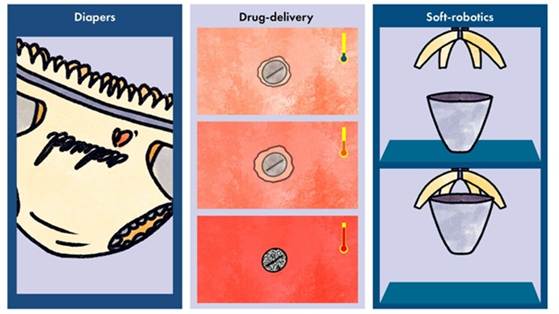
Scientists at Raman Research Institute have discovered that temperature shocks can temporarily convert jammed systems (like glass) into a liquid state, erasing their memory imprints and enabling controlled structure recovery. This breakthrough has significant applications in drug delivery, where microgel particles can be precisely controlled to release medication at targeted sites like tumors.
Why It Matters
Relevant for UPSC and state-PSC candidates studying science policy, government research initiatives, and scientific breakthroughs. Also useful for competitive exams covering current affairs in science and technology sectors.
In Simple Words
Scientists at the Raman Research Institute found that giving jammed, glass-like materials a sudden temperature shock makes them briefly flow like a liquid, erasing their internal 'memory' of how they were formed. This lets researchers control a process called structural recovery.
The materials used, called microgels, are already used in diapers and as temperature-responsive drug coatings — they collapse above 34°C to release medicine precisely at a target site like a tumour, reducing side effects.
Key Points
- Scientists from Raman Research Institute (RRI), an autonomous institute under Department of Science and Technology, conducted the research
- Temperature shocks can make jammed systems flow momentarily and erase memory imprints
- Microgel particles used in the study can absorb 300-500 times their weight in water
- Microgels are currently used in diapers, sanitary napkins, and as temperature-responsive coatings in medicine
- In drug delivery applications, microgels collapse above 34°C (below body temperature) to release drugs at targeted sites
- The study found asymmetry in heating and cooling paths, which can now be controlled through temperature ramps
- Research published in Journal of Colloid and Interface Science
- First author: Sonali Kawale, PhD student at RRI; co-author: Ranjini Bandyopadhyay
Exam Angle
A. Above 34°C — just below normal body temperature — at which point they collapse and release the medicine at the targeted site, such as a tumour.
Source: Press Information Bureau