
Shri Shivraj Singh Chouhan Engages Farmer Leaders Nationwide on Proposed Stronger Seed Act
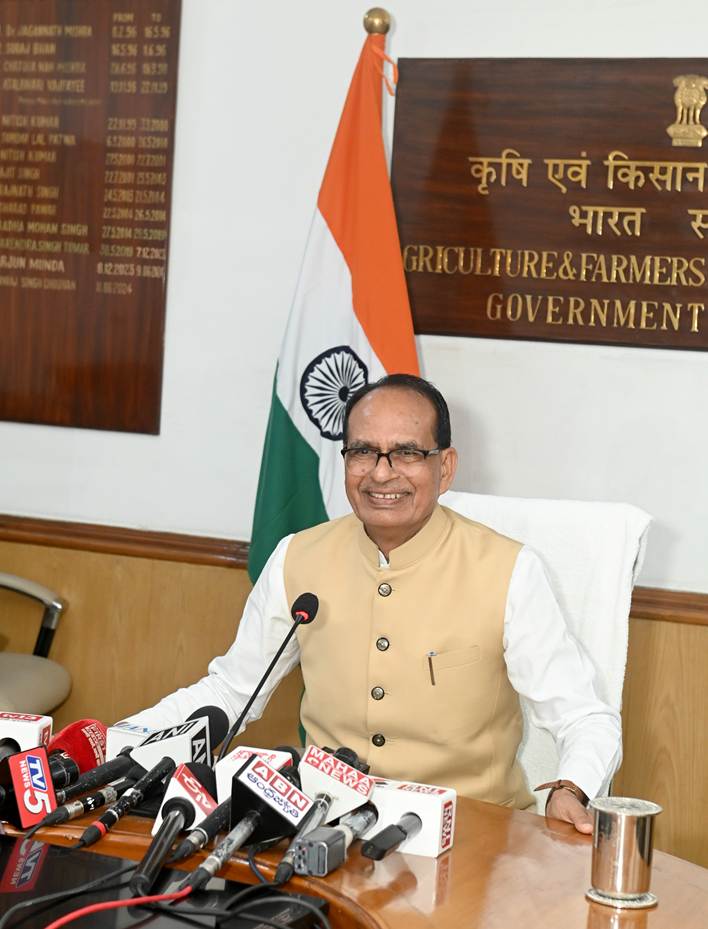
Union Agriculture Minister Shri Shivraj Singh Chouhan held a nationwide consultation with farmer organisation leaders in New Delhi to discuss a proposed stronger Seed Act. The new legislation aims to replace the outdated 1966 Act, protect farmers from fake and substandard seeds, and introduce mandatory QR-based traceability, stricter penalties up to ₹30 lakh with imprisonment, and state-managed Seed Security Funds for compensation within 15 days.
Why It Matters
This is relevant for competitive exams as it pertains to key central government legislative proposals in the agriculture sector, agricultural reforms, and regulatory updates affecting farmers' rights and seed standards in India.
In Simple Words
Union Agriculture Minister Shri Shivraj Singh Chouhan met with farmer leaders from across India to discuss a proposed stronger Seed Act. The current 1966 law and 1983 control order are outdated, leaving about 70% of seeds outside regulatory control and failing to properly handle fake or substandard seeds.
The new legislation proposes mandatory QR-based traceability, a national seed register, state-level Seed Security Funds for compensation within 15 days, and strict penalties ranging up to ₹30 lakh with imprisonment for serious offenses. Traditional seed rights for farmers will remain fully protected without mandatory registration.
Key Points
- Union Agriculture Minister Shri Shivraj Singh Chouhan held a consultation on the proposed Seed Act with farmer leaders at Krishi Bhawan, New Delhi.
- Around 20 farmer organisations participated in the meeting, representing numerous states and bodies like Bharatiya Kisan Sangh and AIKCC.
- The existing Seed Act was enacted in 1966 and the Seeds Control Order came into force in 1983.
- Around 70% of seeds currently fall outside the ambit of the existing Seed Act.
- The proposed law classifies offenses into three categories: minor violations, deliberate violations, and serious offences.
- Serious offences such as selling fake seeds will attract a penalty of up to ₹30 lakh along with imprisonment.
- Every seed packet will carry a QR code to enable traceability of origin, manufacturer, and supply chain movement.
- A Seed Security Fund will be established in every state to ensure compensation to farmers within 15 days in case of seed failure.
Exam Angle
A. 1966
Source: Press Information Bureau