
Science & Technology 25 September 2026 · Event date: 24 September 2026

ICAR-CMFRI Advises Consumers Not to Avoid Tuna Over Parasite Reports from Specific Region
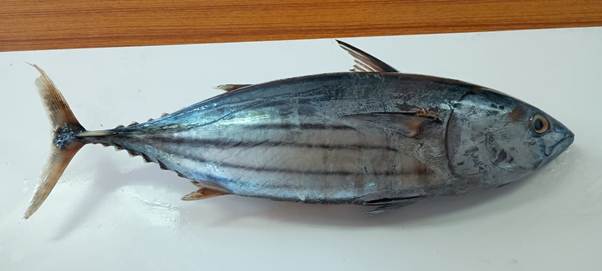
ICAR-CMFRI Advises Consumers Not to Avoid Tuna Over Parasite Reports from Specific Region
Official visual from the source release · Source: Press Information Bureau

The ICAR-Central Marine Fisheries Research Institute (ICAR-CMFRI) has advised consumers not to avoid tuna or other commercially available fish based on parasite reports from a specific geographical region. The Institute noted that fish examined along the Indian coast do not show harmful parasitic infestations. It emphasized that parasite presence varies by region and that proper cleaning, evisceration, and high-temperature cooking ensure food safety.

Why It Matters

The source text does not contain specific details to establish direct relevance for competitive exams beyond general institutional awareness, so candidates should rely solely on the facts provided.

In Simple Words

ICAR-CMFRI in Kochi clarified that consumers should not stop eating tuna or other fish because of parasite reports from a specific region like the Atlantic Ocean off Brazil. Fish examined along the Indian coast show no such harmful parasite issues.

Parasite levels vary by region and ecological conditions. Proper cleaning, gut removal, and high-temperature cooking used in India eliminate risks, allowing consumers to safely enjoy seafood's nutritional value.

Key Points

  • ICAR-Central Marine Fisheries Research Institute (ICAR-CMFRI) is located in Kochi.
  • Consumers were advised not to avoid tuna or commercially available fish due to regional parasite reports.
  • Fish examined along the Indian coast have not shown external manifestations of harmful parasitic infestation.
  • Reports of parasites in skipjack tuna were based on a study from the Atlantic Ocean off Brazil.
  • Parasite presence and abundance vary between individuals and geographical regions.
  • Proper and prompt evisceration during fish handling and processing is recommended.
  • Proper cooking kills parasites and reduces food-safety risks.
  • Seafood in India is generally prepared through cooking at high temperatures.

Exam Angle

Institution
ICAR-Central Marine Fisheries Research Institute (ICAR-CMFRI)
Location
Kochi
Director
Dr Grinson George
Geographical region of study
Atlantic Ocean off Brazil

A. ICAR-Central Marine Fisheries Research Institute (ICAR-CMFRI)

Related Current Affairs

Beyond one: Indian researchers’ experiment could lead to a new tool for quantum measurement Indian researchers have made the first experimental measurement of a quantum measure exceeding one, bringing Quantum Measure Theory (QMT) into the laboratory. Conducted by physicists at the Raman Research Institute (RRI), the experiment used an "event-filter" based on photon routes and polarisation to measure a quantum measure of about 1.17, which surpasses ordinary classical probability. TDB-DST signs agreement with GalaxEye for ₹63.84 crore RDI support to develop next-generation multisensor satellite technology The Technology Development Board (TDB) under the Department of Science and Technology has signed an agreement with M/s GalaxEye Space Solutions Private Limited to provide financial support of ₹63.84 crore. This funding is given under the Research Development and Innovation (RDI) Fund for a project totaling ₹247.69 crore to develop next-generation multisensor satellite technology. The initiative aims to advance OptoSAR imaging technology from TRL-6 to TRL-9. Union Minister Dr. Jitendra Singh Formalises Commercial Launch of Bio-based Biodegradable Plastic under BioE3 Union Minister Dr. Jitendra Singh launched the commercial use of bio-based biodegradable plastic based on Polylactic Acid (PLA) under the Government's BioE3 framework. The initiative is taken forward by Balrampur Chini Mills Limited with a Rs 75 crore grant from BIRAC under the Department of Biotechnology. A 100 TPA pilot-scale facility will be established in Kumbhi, Uttar Pradesh, to support sustainable manufacturing and India's growing bioeconomy. Academia Industry collaboration traced the mechanism of how preservatives take down bacteria enabling smarter preservation Scientists have captured how preservatives like sodium benzoate and phenoxyethanol attack bacteria, revealing a dual mode of action involving cell envelope disruption and internal biochemical damage. The research, conducted by INST Mohali in collaboration with Unilever R&D Bangalore, used advanced imaging and biochemical analyses on Staphylococcus aureus and Pseudomonas aeruginosa. The findings help in designing smarter preservation technologies and optimizing preservative performance for different formulations.