
Fundamental Rights Part-1: Equality & Freedom (Articles 12–22)
In-depth constitutional analysis of Fundamental Rights Part-1 (Articles 12 to 22): State definition, judicial review, equality code, six freedoms, protection in respect of conviction, and right to life and liberty with landmark judgments.
1. Introduction: The Magna Carta of India
Part III of the Constitution (Articles 12 to 35) is universally acclaimed as the "Magna Carta of India". Inspired by the American Bill of Rights, it enshrines an elaborate and comprehensive charter of basic civil liberties designed to uphold the Rule of Law, prevent authoritarianism, and preserve human dignity.
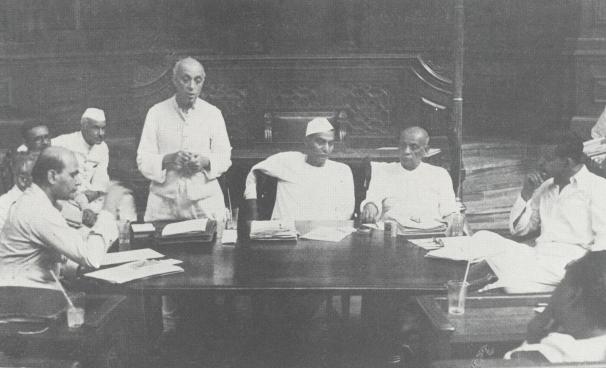
Constituent Assembly: Advisory Committee on Fundamental Rights (1947)
Constituted on 24 January 1947, the high-level Advisory Committee of the Constituent Assembly deliberated and drafted the seminal charter of Fundamental Rights in Part III of the Constitution.
Core Characteristics of Fundamental Rights
- Justiciable Nature: Enforceable directly against the State in the Supreme Court under Article 32 and High Courts under Article 226.
- Qualified, Not Absolute: Subject to reasonable restrictions in the interest of public order, morality, sovereignty, and national security.
- Availability Matrix:
- Exclusively for Citizens (5 Articles): Articles 15, 16, 19, 29, and 30.
- Available to All Persons (Citizens + Foreigners): Articles 14, 20, 21, 21A, 22, 23, 24, 25, 26, 27, and 28 (except enemy aliens who are denied Article 22 protections).
- Suspension During Emergency:
- Under Article 358, Article 19 freedoms are automatically suspended only when an Emergency is proclaimed on grounds of war or external aggression (external emergency), never on armed rebellion.
- Under Article 359 (as amended by 44th Amendment Act 1978), the enforcement of Articles 20 and 21 can NEVER be suspended, even during a national emergency.
2. Article 12: Definition of the "State"
Fundamental Rights are primarily claimable against the State, making the definition under Article 12 crucial:
- Central Level: Government and Parliament of India (Executive and Legislative organs).
- State Level: Government and Legislature of each State.
- Local Authorities: Municipal corporations, panchayats, district boards, port trusts.
- Other Authorities: Statutory and non-statutory bodies within India or controlled by the Government of India.
Ajay Hasia v. Khalid Mujib (1981) - Tests for State Agency: An entity is deemed an "instrumentality or agency of the State" if:
- Entire share capital is held by Government.
- Financial assistance covers almost entire expenditure.
- Monopolistic status conferred or protected by State.
- Deep and pervasive State control exists.
- Functions are of public importance closely related to governmental functions.
Is the Judiciary a "State"?
- When exercising administrative functions (e.g. staff recruitment, tenders), courts are considered "State".
- When exercising judicial functions (delivering judgments and orders), courts are NOT considered "State" under Article 12 (Naresh Shridhar Mirajkar v. State of Maharashtra 1967).
3. Article 13: Laws Inconsistent with Fundamental Rights
Article 13 provides the constitutional bedrock for Judicial Review (Marbury v. Madison doctrine):
- Article 13(1): Pre-Constitutional Laws: Existing laws inconsistent with Part III become void to the extent of inconsistency (Doctrine of Severability and Doctrine of Eclipse).
- Article 13(2): Post-Constitutional Laws: The State shall not make any law taking away or abridging Fundamental Rights; any such law is void ab initio.
- Article 13(3): Scope of "Law": Includes permanent legislation (Acts of Parliament/State Legislatures), temporary laws (Ordinances), statutory instruments (rules, regulations, bye-laws, notifications), and customs or usages having force of law.
- Article 13(4) vs. Article 368:
- Shankari Prasad (1951) & Sajjan Singh (1965): Parliament can amend Fundamental Rights under Art 368.
- Golaknath (1967): Constitutional amendments are "law" under Art 13 and cannot abridge Fundamental Rights.
- 24th Amendment Act 1971: Added Art 13(4) stating Art 13 does not apply to Art 368 amendments.
- Kesavananda Bharati (1973): Upheld the 24th Amendment but ruled that amendments under Art 368 cannot destroy the Basic Structure of the Constitution.
4. Right to Equality: Articles 14 to 18
The Equality Code forms the foundation of egalitarian democracy in India.
📊 RIGHT TO EQUALITY MATRIXArticles 14 to 18: Equality Code & Constitutional Exceptions
From Equality Before Law to Abolition of Untouchability & TitlesArt. 14Equality Before Law & Equal Protection of the Laws
Dual Concepts:- Equality Before Law: British origin, negative concept (absence of special privileges).
- Equal Protection of Laws: US origin, positive concept (equal treatment under like circumstances).
Key Constitutional Exceptions:- Article 361: President & Governors immune from criminal proceedings during term.
- Article 31C: Laws giving effect to DPSPs Art 39(b) & (c) prevail over Article 14.
Art. 15Prohibition of Discrimination on Five Grounds Only
🔒Sign up for Free to Continue Reading
Create a free RojgarSetu account to unlock the full chapter, interactive PYQ practice sets, mindmaps, and track your completion progress.
✓ Full Chapter Content✓ 5+ Interactive PYQs✓ Progress Tracking✓ 100% Free Forever